China has become an important source of pluripotent stem cell lines for research, disease modeling, drug screening, and regenerative medicine studies. Its supplier landscape includes established institutes, biotechnology companies, and specialized cell banks. However, a large catalog does not automatically indicate dependable quality.
As stem-cell pioneer Shinya Yamanaka said, “I was very surprised that only four factors could reprogram adult cells.” This breakthrough reshaped modern cell biology. It also raised practical questions about identity, stability, differentiation potential, and long-term culture performance. Those questions matter when researchers compare Chinese suppliers.
A reliable supplier should provide clear donor information, passage history, authentication records, sterility testing, and genomic stability data. Researchers should also review mycoplasma results, pluripotency markers, certificate details, and batch-to-batch consistency. Strong suppliers usually explain their quality-control workflow rather than hiding behind broad marketing claims.
This overview examines leading Chinese providers of pluripotent stem cell lines. It considers scientific reputation, product range, documentation, technical support, and suitability for different laboratory applications. Some suppliers may excel in induced pluripotent stem cells, while others focus on embryonic lines, disease-specific models, or custom services.
No supplier is perfect. That deserves attention. Public information can be incomplete, and product quality may vary between batches. A careful buyer should request current test reports and discuss application-specific requirements before ordering. The most useful comparison is not simply a ranking. It is a practical assessment of evidence, reproducibility, and research fit.

Top Pluripotent Stem Cell Lines Suppliers in China
Understanding Pluripotent Stem Cell Lines and Their Applications
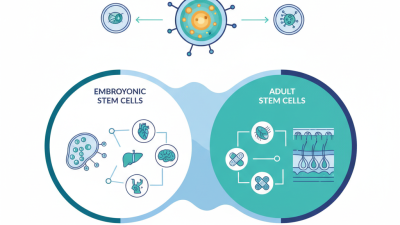
Pluripotent stem cells can form derivatives of all three embryonic germ layers. Researchers use them to model disease, test medicines, and study early human development. Embryonic stem cells and induced pluripotent stem cells are the main categories. Induced cells are reprogrammed from adult tissues, such as blood or skin. According to Grand View Research, the global stem cell market reached approximately USD 17.9 billion in 2023. The report also projects strong growth through 2030. This expansion increases demand for reliable cell-line suppliers in China and other research markets.
Good suppliers should provide traceable donor information, passage history, and detailed testing records. Essential checks include OCT4, SOX2, NANOG, and TRA-1-60 expression. Karyotyping, mycoplasma testing, and genomic stability assessments also matter. The ISSCR Standards for Human Stem Cell Use emphasize documentation, quality control, and responsible research practices. Cells should also show reproducible differentiation into neural, cardiac, and hepatic lineages. A certificate alone is not proof. Independent verification remains wise, especially for costly experiments. In practice, thawing performance and recovery time can reveal weaknesses that product sheets hide. The field is not perfectly standardized. Researchers should compare methods carefully, record unexpected results, and avoid treating every supplier claim as settled evidence.
| Data Dimension | Factual Information | Common Applications | Supplier Evaluation Considerations |
|---|---|---|---|
| Main Cell Categories | Human embryonic stem cell (hESC) lines and human induced pluripotent stem cell (hiPSC) lines are the two principal categories of human pluripotent stem cells. | Disease modeling, developmental biology, drug discovery, toxicology, and regenerative medicine research. | Confirm the cell category, species, tissue or donor origin, ethical documentation, and intended research use. |
| Cell-Line Origin | hiPSCs are generated by reprogramming differentiated somatic cells, such as peripheral blood cells or skin fibroblasts, into a pluripotent state. | Patient-specific disease models, genetically diverse research panels, and comparative studies using healthy controls. | Request traceable donor information where permitted, consent status, reprogramming history, and passage records. |
| Pluripotency Evidence | Pluripotent lines are commonly characterized using marker panels such as OCT4, SOX2, NANOG, TRA-1-60, TRA-1-81, and SSEA-4. | Selection of lines capable of differentiating into ectoderm, mesoderm, and endoderm derivatives. | Look for recent quality-control results, accepted assay methods, test dates, and clear release specifications. |
| Genetic Identity | Identity testing may include short tandem repeat (STR) profiling, karyotyping, copy-number analysis, and targeted genetic testing. | Reproducible disease research, gene-editing studies, and verification of parental or donor relationships. | Prefer lines with documented identity authentication and information about chromosomal stability during expansion. |
| Mycoplasma and Sterility Testing | Mycoplasma testing is a standard part of cell-culture quality control because contamination can alter cell growth and experimental results. | Research workflows requiring reliable cell expansion, differentiation, and downstream molecular analysis. | Check the testing method, test date, acceptance criteria, and whether sterility documentation accompanies each lot. |
| Reprogramming Platform | Common reprogramming approaches include integrating viral vectors, non-integrating Sendai virus, episomal plasmids, synthetic mRNA, and other non-integrating methods. | Basic research, genome engineering, translational studies, and applications where residual vector sequences must be minimized. | Select the platform according to the project’s requirements for genomic integration, efficiency, scalability, and regulatory suitability. |
| Differentiation Potential | Pluripotent stem cells can be directed toward cell types such as cardiomyocytes, neurons, hepatocyte-like cells, pancreatic cells, and retinal cells. | Cardiac safety testing, neurodegenerative disease models, liver toxicity studies, diabetes research, and ophthalmology research. | Evaluate published or validated differentiation protocols, expected yield, purity, maturity, and batch-to-batch consistency. |
| Culture Format | Lines may be supplied as cryopreserved vials, actively growing cultures, or cells adapted to feeder-free and defined culture systems. | Small-scale academic experiments, high-throughput screening, process development, and laboratory method transfer. | Confirm vial size, viable cell count, recommended seeding density, recovery instructions, medium requirements, and shipping conditions. |
| Cryopreservation and Shipping | Cryopreserved pluripotent stem cells are generally transported under validated frozen-chain conditions and require controlled thawing and recovery procedures. | Distribution between laboratories while maintaining cell viability and functional performance. | Review packaging validation, temperature monitoring, delivery time, replacement policy, and post-thaw recovery data. |
| Genome-Edited Derivatives | Gene-edited pluripotent lines can include knockout, knock-in, reporter, or corrected isogenic derivatives created using genome-editing technologies. | Mechanistic studies, target validation, phenotype rescue experiments, and development of disease-specific cellular models. | Request editing-site sequence data, off-target assessment where available, clone information, and confirmation of pluripotency after editing. |
| Ethical and Biosafety Documentation | Human cell materials should be accompanied by appropriate consent, ethical review, biosafety, and material-transfer documentation according to their source and intended use. | Institutional research, collaborative projects, clinical translation planning, and regulated laboratory environments. | Verify permitted use, restrictions on redistribution, donor-consent scope, biosafety classification, and applicable Chinese regulatory requirements. |
| Documentation and Traceability | Useful documentation includes a certificate of analysis, lot number, passage number, cell origin, culture history, QC results, and handling instructions. | Experimental reproducibility, technology transfer, audit preparation, and long-term cell-bank management. | Prioritize suppliers that provide complete, current, and lot-specific records rather than generic product descriptions. |
| Typical Research Use Level | Most commercially supplied pluripotent stem cell lines are intended for research use unless specific regulatory authorization states otherwise. | Preclinical research, assay development, academic studies, and laboratory-scale process evaluation. | Confirm whether the material is research-use-only, whether clinical use is prohibited, and which licenses or approvals are required for the planned work. |
Note: This comparison focuses on scientifically relevant supplier and cell-line attributes and intentionally excludes company names, brands, rankings, and commercial pricing.